Bowie’s Blackstar - Ten Years On
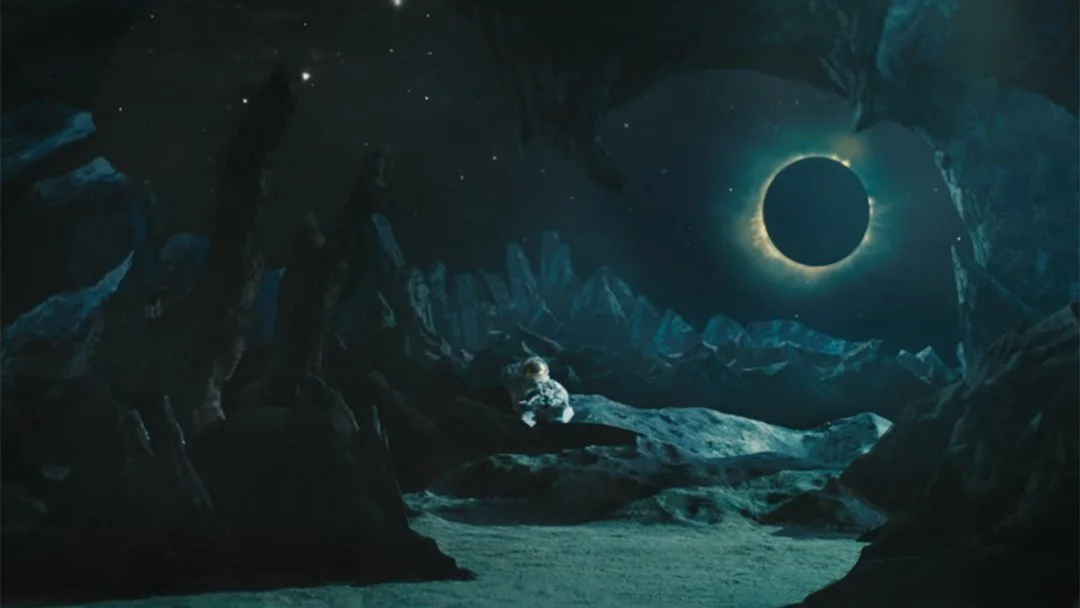
It’s now been ten years since Bowie’s death, and the release of his final (and in my opinion most accomplished) album, Blackstar (2016). The radios this week have been endlessly chattering about the impact of Bowie and his works, and it makes me wonder if anyone has really accepted his passing yet - it seemed monumental and I remember the day clearly. I’m not one for hero worship, or celebrity culture, but I do have a strong admiration and respect for artists and what they create, and I suppose in that line of thinking Bowie seems like such a behemoth in the music world for all of his personas, reinventions, and approaches to his musical style. His influence is everywhere. Blackstar however is an album that itself is inspired by many modern artists, such as Kendrick Lamar, Death Grips, James Murphy (LCD Soundsystem) - and of course, Elvis Presley - with the titular ‘Blackstar’ having its own multitude of meanings and contexts across the album but perhaps most concretely coming from Presley’s own lyric: ‘When a man sees his Blackstar / He knows, he knows his time has come’. The album has had so much written about it already, and my thoughts on writing this were largely governed by my overwhelm of such a topic, but it seems like now is a good time to discuss and revisit the album in any capacity.
I should note - it’s an album that hasn’t left my listening rotation for a long while, perhaps since release, and I find myself coming back to it frequently - despite its seven tracks, it always offers something new - whether musically, lyrically, or in the form of the recorded performance. I think since its release it’s been wrongly recognised, or penned as an album which serves as Bowie’s own eulogy or bowing out, but I think that is only the literal interpretation. The songs offer more reflection on life as a whole, for all its anxieties, fears, regrets. It’s as though Bowie’s address Lazarus is a theatrical vehicle with which to explore the struggles of life and its varying perspectives.
Blackstar
The opening track, Blackstar - noted as a symbolic star in the track listing - functions as the opening, and central piece of the album. It opens to a dark, ambiguous tone - predominantly Phrygian, before assembling itself over a skittering drum beat (Marc Giuliana), taking on a mysterious tone as Bowie’s vocals simmer with a despondent tone:
‘In the villa or Ormen, in the villa of Ormen
Stands a solitary candle, ah-ah, ah-ah
In the centre of it all, in the centre of it all
Your eyes’
This section is largely governed by small melodic ranges, with the bass and saxophones climbing in steps, to my ear the tonal centre seems ambiguous and gives the track an unsettling atmosphere. I’m particularly intrigued by the reference to ‘Ormen’, Norwegian for serpent, as well as relating to worms/maggots - evident imagery of death. Subsequently, if the candle is taken as a symbol of the soul, Bowie seems to be invoking a sense of ritual over his life, with his audience being his central witness. It’s quite the opening for just a few lines, half of which are in repetition. I am intrigued as to whether the intention was to denote the relationship between audience and soul as integral to the existence of Bowie’s identity (and perhaps not David Jones). If you listen, alongside the music video, there is deliberate imagery of a star studded skull - many of which take as Major Tom - and with the same mention of ‘eyes’ is scenes of an eclipse. Given Bowie’s lack of faith in Christianity, I wonder if this imagery is consciously pointing towards something Gnostic instead. With some brief research, I was unaware that Bowie had his own obsession with Alistair Cowley during the 70s - often during a drug fuelled craze, and would draw pentagrams upon the floor. The idea is a little surreal, but I wonder if this opening verse is instead playfully pointing towards something more satanic - a double reading between what might be a traditional Christian interpretation and an occult ritual. ‘At the centre of it all’ is a specific reference to Cowley’s The Star Sapphire, a form of sexual ritual (from what little can be found online). This thinking gives rise to the second verse’s exposition: ‘On the day of execution / only women kneel and smile’. In the video Bowie wears a blindfold as though awaiting his own execution - presumably a reflection of his own feelings towards his terminal illness. At the same time, Major Tom’s body floats towards the eclipse and we are me with images of women with tails. It’s all quite bizarre, but I suppose that is it exactly - the scene is a very alien, perhaps Bowie way, of representing what is a fallen angel. I view this as Bowie playing upon his own canon to dramatise the death of Bowie as a person, but maybe not an idea?
Before long the procession ends, fading away from this experimental jazz tonality to a lighter section, introduced with synthesised pads and strings. Bowie adopts the past tense, dispelling the song’s mystique and narrating the aftermath of this ritual:
‘Something happened on the day he died
Spirit rose a metre and stepped aside
Somebody else took his place, and bravely cried
(I’m a Blackstar, I’m a Blackstar)’
It’s an unexpected change, as though the song’s drama has moved to a new act, without any explanatory scene to precede it. The rhythm section returns, this time in a more conventional pop structure (F# Major I believe), before Bowie ironically plays upon legacy:
‘I can’t answer why (I’m a Blackstar)
Just go with me (I'm not a film star)
I’ma take you home (I'm a Blackstar)
Take your passport and shoes (I'm not a popstar)
[…]’
In echo to the first section of the song, the harmonic structure mimics the single tone movement from a C7 to a C#7 (I had to figure this with a guitar at the behest of my theory-less ears!), and so refashions the original ‘unease’ into a sleazy swagger. I find it easy here to miss the underlying scene portrayed by the lyrics - that is, the sense that a man is being beckoned by death without explanation, all while the chorus of backing vocals embarks on a series of star-based negations. This series of negatory exclamations refocus the mystery of the ‘Blackstar’ as an unknowable identity - a sort of apophasis in the sense that Bowie is mocking himself by stating everything he isn’t, to elevate himself to something greater - a sort of ironic God status through stardom. I think here, Bowie is making the point that many of these Hollywood ideals of stardom are hollow - all while musing upon the idea that he too will be replaced by another star figure. In a way, the movement towards a more traditional pop-structure perhaps underpins this ideal of Western convention - e.g Christianity and celebrity culture, alongside something more spiritual - such as Bowie’s previous address of Gnosticism. I wonder if the repeated exclamation of a ‘Blackstar’ is Bowie playing with its meaning once again - against the backdrop of his stardom/legacy.
Blackstar itself takes several immediate meanings: it refers to cancer in terms of radiology, or the process of a star collapsing into a singularity, or a rebirth/eclipse in occult mythology. Through Bowie’s interest in Gnosticism, he uses this section of the song to practice ‘Gnosis’ (an intuitive process of knowing/discovering oneself). So, as one set of lyrics describe a sense of death and legacy, the choral refrain is simultaneously employing ‘gnosis’ as a means of salvation while rejecting/negating the hedonism of other ‘star’ roles. Consequently, the rising spirit of Bowie is more of a detachment from an audience’s idea of ‘David Bowie’, than it is David Jones himself toying with the idea of performance and performative identity.
Once again, the song shifts back into its original Phrygian tonality, and if you’re watching the video - some kind of ritual takes place? Major Tom’s star studded skull is brought to the centre circle of a group of vibrating women, just as some sort of Lovecraftian creature ‘dances’. I don’t know how to explain it. It’s really bizarre. By this point my interpretation goes awry.
Lazarus and Beyond
In contrast, Lazarus moves away from the drama of Blackstar with much more plain, direct lyrics. The opening is laid down with simple drums, and a guitar line that harks to something in the style of Peter Hooke/Joy Division, giving the impression of something floating about from a high perch. Before long the song’s defining saxophone line enters and so do Bowie’s vocals:
‘Look up here, I'm in heaven
I’ve got scars that can’t be seen
I’ve got drama, can’t be stolen
Everybody knows me now’
To me, Bowie sounds a little detached from himself - as though these lines are a separation between the ‘drama’ of an audience, and perhaps however Bowie views his own act. In a way, I feel the song’s voice is more David Jones than it is Bowie. The scars and drama, which are unveiled from secrecy, seems an admission that all the cards are left on the table -as though Bowie’s usual adoption of another persona has been exhausted, he is only himself. Even more directly, an admission of his terminal diagnosis - I don’t know, I equally don’t want to read that literally perhaps, even if it’s very plainly there. Maybe then, being ‘known’ is an admission of the album’s more autobiographical nature, and by extension The Next Day (2013) too.
I’m intrigued by the next lines, again there is the acknowledgement of great ‘height’ but with the effects of medication, as though tightrope walking:
'Look up here, man, I’m in danger
I’ve got nothing left to lose
I’m so high, it makes my brain whirl
Dropped my cellphone down below
Ain’t that just like me?’
Even if not from a spiritual perspective, Bowie is positioning himself for a fall whilst acknowledging his more literal experience of being disconcerted by heavy medication. I’ve always been intrigued by the cellphone line - finding it quite out of place in the song’s weighty images, but I realise it isn’t. I wonder if Bowie uses the cellphone as a counterweight to his fall, like a reversal of an ascension. On a functional level, you could interpret the phone as a loss of communication or connection to the world, but I wonder if Bowie is more alluding to the metonymy of phones - as a representation of modern life. In some ways they define who we are, storing a good deal of our personal information as well as providing our online personas. Maybe it’s also a letting go of the anxieties of modern living, I'm not sure.
The phone is contrasted by the natural image of a bluebird, one that allows the song to finally achieve a simple rhyme as well as a fulfilment of this ‘Lazarus’ image. Typically bluebirds can be associated with renewal, dating back to ancient times, so I wonder if Bowie is using this as a simplistic means to counteract the ‘scars’ of the song’s opening. A metaphorical way out from his precarious position.
The bridge offers a deliberate americanism: ‘I was looking for your ass’. With the backdrop of New York, and exhausted money, I wonder if Bowie is again invoking the Lazarus figure in a throwaway sense - ‘your ass’ simply referring to searching for Jesus, or perhaps even the Donkey he arrived on. With Bowie’s opposition to organised religion, the image then seems to demonstrate the result of desperation - of being without money, or having foolishly lived like a king. Again - I’m unsure.
Outside of these two monolithic tracks, Blackstar offers other more esoteric tracks - adopting different, often characterised perspectives in perilous situations. ‘Sue. (Or in a Season of Crime)’ is composed as a manic frenzy, retelling the story of the play Tis a Pity She Was a Whore (contrary to the album’s track with the same name). Amidst frantic drumming and deranged guitar phrases, Bowie croons with desperation over the sickness of Annabella (Sue) before her deceit and murder. A moment which reveals the influence of Death Grips, transforming the song into a wailing cacophony of driven guitars and low synth bass. Here the season of crime relates to the lack of atonement for any of the play’s victims. The song is wonderful and bizarre, it leaves me wondering why Bowie chose to condense an entire play into a song whilst also embarking into experimental jazz - no less, I really like it. The same mania can be found within the album’s second track: ‘Tis a Pity She was a Whore’, again referencing the same play but this time directly. It’s again, its own whirlwind into a world of androgynous promiscuity, and what I gather is Bowie’s own ironic attack on his own infidelity.
Off in its own world of bizarre, ‘Girl Loves Me’ presents itself as a discordant love song - constructed half from Nadsat (the language of Anthony Burgess’ A Clockwork Orange) and half from Polari, a gay slang from 70s Britain. The discordance of such language reflects Bowie’s own confusion in the face of heavy medication, with the bass pulsing like a bad headache. It features what I think is my favourite lyric on the album: ‘Where the fuck did Monday go!?’ - it’s both comedic and distressing. Amidst the mania of the previous two tracks I've mentioned, the composition of this song - notably the consistent shuffling drum beat, offers a more regimented approach to the album’s songwriting - moving to something more angular, almost Krautrock-esque, instead of the manic jazz elements felt elsewhere.
The final two tracks then I think are a movement away from the album’s various dramas and to something more directly emotive/romantic (I am undecided).
’Dollar Days’ alone is it’s own delicate musing on fate - weighing in on the anxieties of life as Bowie complicates the triumph of the opening lyrics:
’Cash girls suffer me, I’ve got no enemies
I’m walking down
It’s nothing to me
It’s nothing to see’
Quickly the mobility of ‘walking’ is mirrored by ‘falling’ as Bowie grapples against a continual juxtaposition of his life’s success and regrets, coming to no real conclusion. Continuously Bowie seems to be trying to guise himself in immortality just as the cracks show through. Eventually life is positioned like the ouroboros (serpent devouring its own tail):
‘Dollar days, survival sex
Honour stretching tails to necks
I’m falling down’
The song pounds with desperation, as it slices through Bowie’s attempts at defiance. Bowie’s suggestion, is that even as individuals we are all weakened by our own cyclical habits of self destruction - perhaps by idealising the superficial - dollars and survival sex. Instead Bowie wants to advocate for something greater:
‘Push their backs against the grain
And fool them all again and again’
Bowie’s own assessment of his acts of creation, or art, is his way of raging against the dying of the light, of trying to grapple with something greater. He expresses an indefatigable desire to creature, and ‘fool’ or deceive in a way that is revealing or spectacular - not ephemeral.
In desperation, the track eventually falls into its own cruel irony: ‘I’m dying to’, over and over. At once Bowie is alluding to his desire to make art, even as he did while undergoing treatment, and at the same time he’s reminding his audience that he is ‘dying [too]’. Bowie is sickly playing upon his condition, with gallows humour.
I think ultimately, if this song is in address to his fans - Bowie’s suggestion of ‘Dollars Days’ reveals a sense of fragility in the spotlight: ‘can’t believe for just one second I’m forgetting you’. Bowie’s desperation, in part, comes from a desire to be recognised by his audience - otherwise the idea of Bowie holds no weight. But at the same time, there is a part of Bowie that hates the exposure - David Jones presumably. Here ‘I’m trying to / I’m dying to’ reminds us of that. It’s multi-faceted, Bowie’s own reclusive nature following his career break (around 2004) reflects this - ultimately there was a desire to move away from the probing nature of interviews, as well as being continuously defined by critics and the media.
For me this is the most emotionally compelling song on the album.
‘I Can’t Give Everything Away’ sends the album out bittersweetly then - mostly carried by its own titular lyric and a flurry of gliding saxophone lines, this time over programmed drums.
I wonder if the defining line: ‘I know something’s very wrong / The pulse returns the prodigal sons’ is its own reflection on Major Tom, or Bowie’s persona as ‘the alien’ / an extraterrestrial, now leaving - having completed the ‘pulse’, a sense of moving somewhere else - now optimistically I'd hope. I love that as a final track it features saxophone heavily, David’s first instrument.
Blackstar is such a phenomenal album, even outside of it being Bowie’s final work, and it impresses me with every listen - I am still filled with awe when I hear the sequence of tracks. If you’ve never listened, now may be a good time to. If you have listened, maybe go check out the ‘No Plan’ EP, featuring extra tracks from the sessions - those are special too. I hope this has been a mostly insightful entry, it’s hard to balance analysis, personal opinion, and musical knowledge across a whole body of text - doubly so when the album you’re discussing is so monumental, but I hope this provides some interesting thoughts on a fantastic album. As I watch the Blackstar video again, I'm as ever taken with Bowie’s charm. Til’ next week.
You can also find these entries on Substack, here.